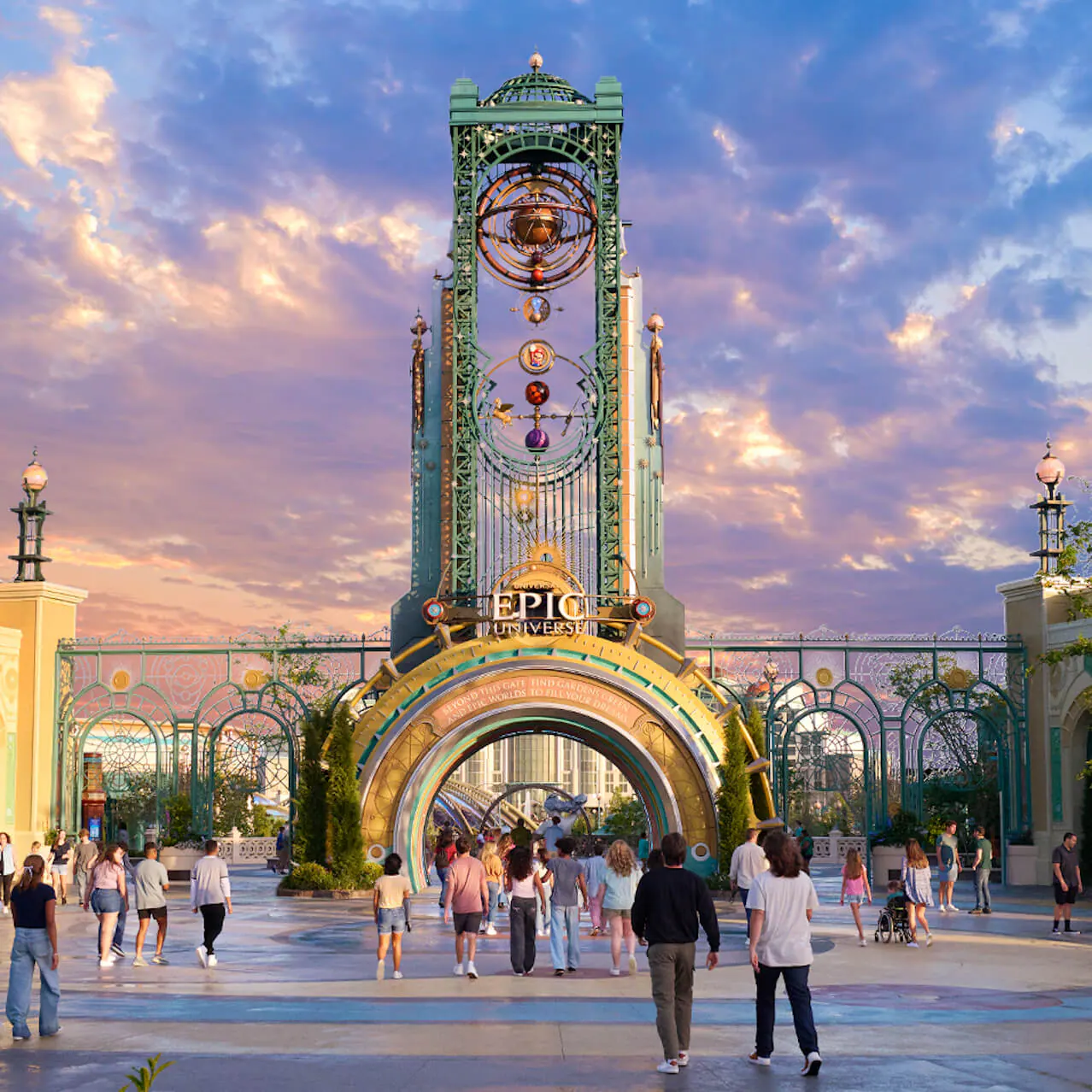
Essential Planning Elements for Universal Studios Florida Events
Integration of brand narratives with existing street sets and built-in decor
Selection and coordination of themed dining to support event storytelling

Venues
Universal Studios Florida in Orlando, with display planning tied to venue fit, setup timing, graphics, and show-floor execution.
Integration of brand narratives with existing street sets and built-in decor
Selection and coordination of themed dining to support event storytelling
The foundational strength of Universal Studios Florida lies in its capacity to elevate events through environments directly drawn from film and television heritage. Official descriptions highlight how the venue sets the stage for incredible events by deploying its magnificent street sets that feature built-in decor, eliminating the need for extensive custom construction while still delivering high production impact. Themed dining options further reinforce narrative coherence, allowing smooth transitions from presentations to meals that maintain the immersive quality throughout the program.
This configuration proves particularly effective for product launches, leadership summits, and incentive programs where the goal extends beyond information transfer to creating lasting emotional connections. Attendees are positioned as central figures within the experience, an outcome that aligns with modern expectations for experiential marketing. Within the context of Orlando's meetings economy, this venue provides a counterpoint to the functional display halls and ballrooms found at properties like the Rosen Centre Hotel or Caribe Royale Orlando, offering instead a living set that enhances rather than competes with branded messaging.
The Universal Area occupies a distinctive position within Orlando's segmented meetings landscape, situated along Universal Boulevard in close proximity to the I-Drive convention cluster yet functionally differentiated by its entertainment core. While the primary convention district centered on the Orange County Convention Center delivers 7,000,000 square feet of total meeting and event space including multiple dedicated assembly areas, Universal Studios Florida contributes irreplaceable thematic variety that supports multi-day programs requiring both structured sessions and high-impact social components.
This differentiation becomes strategic when coordinating larger citywide events that leverage the OCCC for daytime display and breakout activity before transitioning participants to the Universal Area for evening programming. The venue's movie and television foundation allows brands to create moments of recognition and delight that reinforce key messages in ways traditional hotel ballrooms cannot achieve. Nearby properties in the Disney/Bonnet Creek and Lake Buena Vista clusters offer resort-style amenities, but Universal Studios Florida uniquely delivers large-scale, built-in production elements that align with activation objectives.
Effective coordination at Universal Studios Florida requires meticulous attention to logistical sequencing given the venue's dual role as both operating theme park and event destination. Move-in and move-out windows must be negotiated against daily park operations, with particular focus on protecting existing street sets and decor that form the foundation of the guest experience. This constraint differentiates it from dedicated convention facilities like the Orange County Convention Center, which features 173 truck bays and three covered loading docks optimized for frequent display turnover.
Activation planning benefits from the venue's inherent production capability, yet still demands clear mapping of power requirements, structural load limits on sets, and pathways for materials handling that avoid interference with public areas. Themed zones require careful segmentation to maintain both event integrity and overall park flow, creating operational complexity that rewards advance modeling and contingency development. Coordination with the designated event services team becomes essential for identifying approved pathways and timing parameters.
Florida operates as a right-to-work state, establishing a foundational open-market labor environment that applies across Orlando venues including special event properties like Universal Studios Florida. This framework supports flexibility in service provider selection while requiring explicit confirmation of each event's specific labor parameters through the official service manual and show organizer directives. Public documentation for similar venues indicates that certain technical services may be handled directly by the property while others remain open to exhibitor-appointed contractors, making early review non-negotiable.
Unlike the formalized exhibitor and EAC conditions published by the Orange County Convention Center for utility and rigging services, special event venues typically present requirements within individual event kits that reflect the unique operational demands of theme park environments. Planners should anticipate show-specific rules that address both skilled labor for technical installations and general support staff for attendee management across the various street sets and dining locations.
The true competitive advantage of Universal Studios Florida emerges when planners fully leverage its movie and TV heritage to craft experiences that transcend typical corporate events. Magnificent street sets provide ready-made environments that can be selectively enhanced rather than built from scratch, allowing brands to insert their narratives into recognizable contexts that immediately resonate with attendees. Themed dining options extend this immersion into refreshment breaks and formal meals, creating comprehensive storytelling arcs that reinforce key messages throughout the day or evening.
Making attendees feel like stars requires deliberate choreography that positions participants as active elements within the production rather than passive observers. This might involve guided interactions with sets, carefully timed reveals, or personalized moments that utilize the venue's inherent theatricality. Such approaches prove especially powerful for product introductions or recognition programs where emotional impact drives measurable outcomes in engagement and recall.
Universal Studios Florida leverages magnificent street sets, built-in decor, and themed dining to create cinematic, immersive experiences where attendees feel like stars. This differentiates it from the Orange County Convention Center's 2 million square feet of display space and the more traditional ballroom and meeting room configurations at properties like the Rosen Centre or Hyatt Regency Orlando.
Florida functions as a right-to-work state, creating an open-market labor environment. However, specific rules are determined by each event's service manual, show organizer, and venue policies. Early verification with the official event kit is required rather than assuming uniform conditions across Orlando venues.
Yes, the Universal Area location supports integration with the I-Drive convention district and OCCC programs. Strategic scheduling allows daytime convention activity to transition into themed evening experiences that utilize the park's movie-based environments for enhanced attendee engagement.
The venue's description positions every event as a blockbuster through its production-quality street sets and decor that provide immediate visual impact and storytelling frameworks. Themed dining options further support narrative development, making it ideal for brand experiences that require more than standard meeting infrastructure.