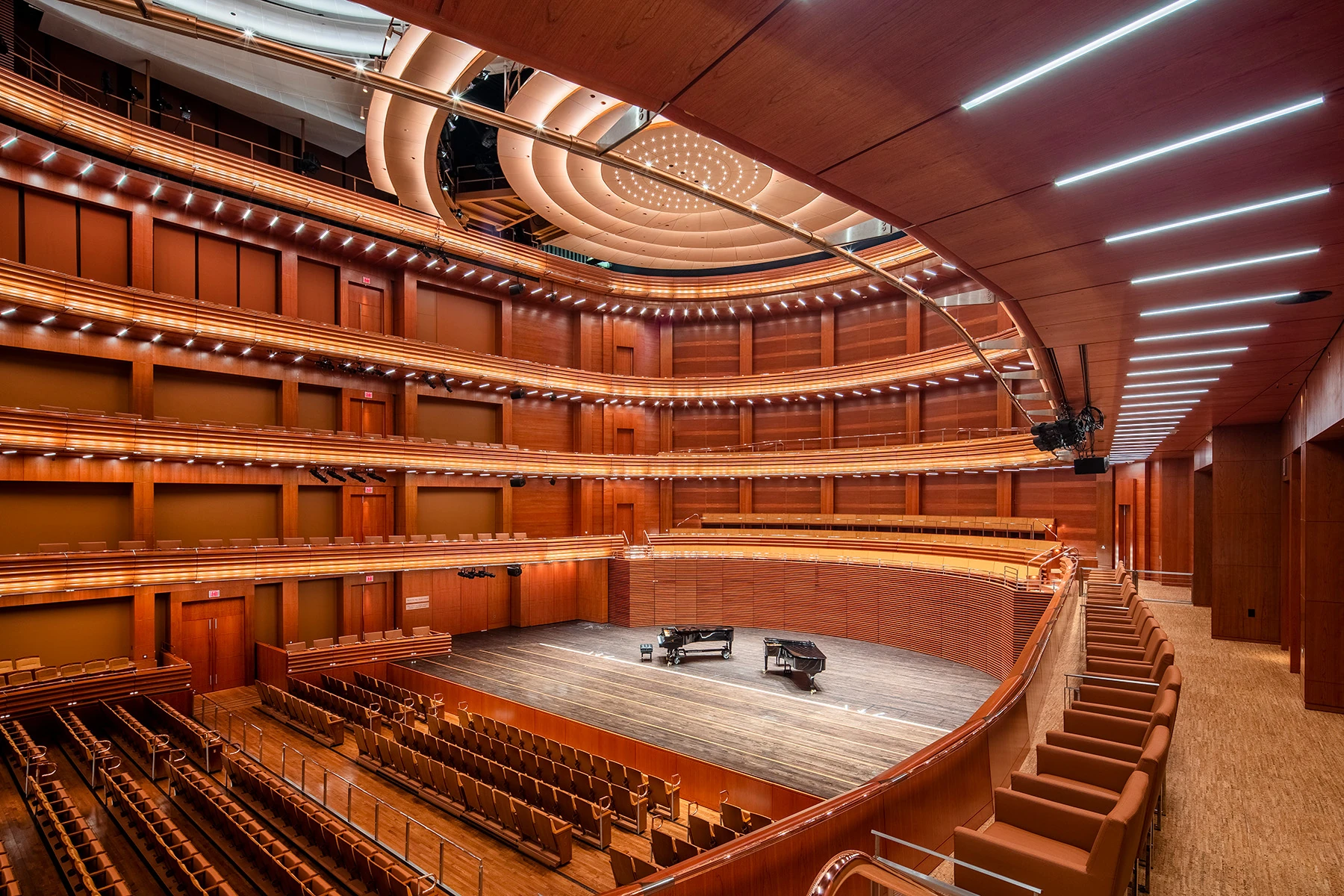
Key Planning Factors for Dr. Phillips Center Events
Documented banquet capacity of 2,700 and reception capacity of 300
Downtown location at 445 South Magnolia Avenue distinct from I-Drive clusters

Venues
Dr. Phillips Center for the Performing Arts in Orlando, with display planning tied to venue fit, setup timing, graphics, and show-floor execution.
Documented banquet capacity of 2,700 and reception capacity of 300
Downtown location at 445 South Magnolia Avenue distinct from I-Drive clusters
Opened in 2014, the Dr. Phillips Center for the Performing Arts quickly established itself as a major destination within downtown Orlando. Its rapid rise to prominence is evidenced by inclusions in Travel + Leisure magazine’s list of 25 new attractions worth a visit and Southern Living’s selection of the 50 best places in the South. These acknowledgments reflect more than tourism appeal; they signal a venue capable of delivering memorable experiential layers for corporate and association events that seek to move beyond standard meeting formats.
The center’s stated vision of Arts for Every Life® translates into year-round programming that encompasses Broadway shows, popular music concerts, stand-up comedy, American dance, opera and symphony performances, and family-friendly productions. For event planners, this calendar creates both opportunities and constraints. Strategic coordination involves reviewing the performance schedule early to identify windows where reception or banquet spaces can incorporate live segments without conflict, thereby elevating the overall event narrative with authentic cultural content unavailable in standard convention facilities.
Available metrics for the Dr. Phillips Center list a banquet capacity of 2,700 and a reception capacity of 300. These figures position the venue for substantial seated dinners, awards presentations, or galas where the integration of performance elements can create memorable focal points. Without extensive display space listed in official destination data, planning emphasizes configuration of existing areas for display, sponsorship, or interactive zones that complement rather than dominate the artistic programming.
Planners must verify exact room dimensions, ceiling heights, and technical capabilities directly against each event’s service manual, as public data remains limited compared to the Orange County Convention Center’s detailed 2,053,820 square feet of display space and 74 meeting rooms. The performing arts orientation means many spaces are optimized for stage visibility, acoustics, and lighting grids rather than forklift-accessible loading or booth setups typical of pure convention environments.
Situated at 445 South Magnolia Avenue in the downtown district, the Dr. Phillips Center offers a counterpoint to the dense concentration of hotels and facilities along International Drive and the Orange County Convention Center campus. This downtown placement provides distinct logistical considerations, including proximity to the city’s central business and cultural core rather than the tourist corridor that includes SeaWorld, Universal, and Disney-area properties.
Event coordination benefits from the venue’s urban context, where attendees can combine daytime meetings with evening performances or vice versa without extensive shuttling. However, transportation planning must account for the separation from the primary convention cluster that includes properties such as the Hyatt Regency Orlando, Rosen Centre Hotel, and Rosen Shingle Creek. Official Orlando meetings resources highlight the entire region’s connectivity, allowing planners to route groups effectively between downtown cultural events and larger I-Drive activations.
Florida functions as a right-to-work state, establishing an open-market labor environment rather than default venue-wide union exclusivity. At the Dr. Phillips Center and similar special-event properties, specific labor rules are outlined in each event’s service manual and exhibitor kit rather than through publicly fixed mandates. This requires planners to confirm responsibilities for setup, technical services, and teardown well in advance.
While the Orange County Convention Center publishes formal exhibitor and exhibitor-appointed contractor conditions with direct ordering for utilities and aerial rigging, special-event venues like Dr. Phillips follow comparable yet distinct protocols. Coordination therefore centers on clear delineation of what the venue handles internally versus what outside contractors may provide, always referencing the latest documentation to maintain compliance and operational smoothness.
The center’s calendar of Broadway, opera, symphony, comedy, dance, and family productions creates natural avenues for thematic enhancement of corporate events. Planners can explore programming alignments where a pre-event reception flows into a curated performance segment or where sponsor activations occur in lobby areas during intermissions. This integration differentiates events held at Dr. Phillips from those confined to ballroom or display spaces at nearby Rosen Plaza or Caribe Royale properties.
Successful execution depends on advance review of the venue’s performance schedule and technical rider requirements. The same infrastructure that supports international artists can be leveraged for custom staging, lighting, or audio elements that reinforce brand messaging or conference themes. Such coordination transforms a standard gala into an experience that attendees associate with Orlando’s cultural depth rather than solely its theme-park reputation.
The venue supports banquet events up to 2,700 guests and receptions for 300 attendees according to official Orlando meetings listings. Exact room configurations and technical capabilities should be confirmed directly with the venue for each event.
The center opened in 2014 and was named one of Travel + Leisure’s 25 new tourist attractions worth adding to a bucket list as well as one of Southern Living’s 50 best places in the South. It operates under the vision of Arts for Every Life®.
Florida is a right-to-work state, creating an open-market labor setting. Specific rules for the Dr. Phillips Center are detailed in each event’s service manual rather than through a fixed venue-wide policy. Confirmation with the latest exhibitor or organizer documentation is required.
The center presents more than 300 shows each year featuring Broadway, popular music, comedy, American dance series, opera and symphony, family shows, and additional genres. This calendar creates opportunities to integrate artistic elements into corporate and special events.